

The Hijab Ban Ruling In India Attempts To Tell Muslims How They Should Practice Their Religion.
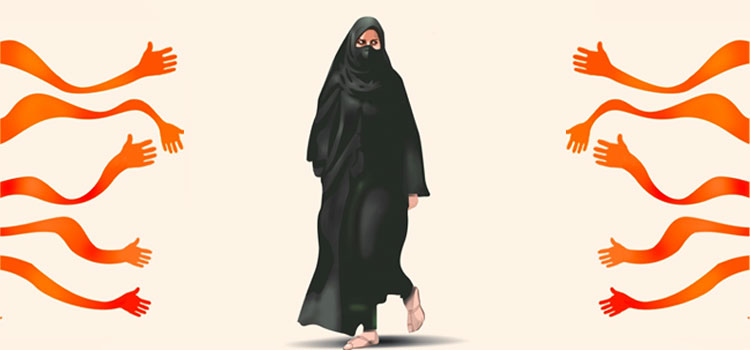
When an International School my boys attended called to say they might not be allowed to offer their Friday prayers on campus, I thought to protest, but then, resorted to a moment of silence instead. This is not my land, my logical self argued, if the law of the land prohibits outward show of religious faith, I must abide. Interestingly enough, the students were allowed to wear a Hijab if they wanted to. But when the Muslim students, Indian citizens I presume, were banned from wearing the Hijab in their own country, I struggled to understand why they must abide by it. Article 25 of the Indian constitution states, and I quote:
Subject to public order, morality and health and to the other provisions of this Part, all persons are equally entitled to freedom of conscience and the right freely to profess, practise and propagate religion.
Article 25 of the Indian Constitution
Where Will You Draw The Line?
Now here’s the intrinsic problem with this ruling. (And I’m not even a lawyer to figure it out). The court is attempting to stay true to Article 25 of the constitution by granting everyone the right of freedom to ‘practice’ their religion. However, they then go a step further to define what IS an ‘essential religious (Islamic) practice’ deeming the wearing of Hijab as not an essential Islamic practice and hence, considering it (wearing of Hijab) unprotected under the constitution. It would, however, be interesting to know whether the court ruling considered the advice of Islamic scholars to deem what can and what cannot be considered essential Islamic practice.
It would be critical to point out that if the said Muslim Women resort to praying inside the vicinity of the college, is that (praying) a nonessential Islamic practice too? If they ask for holidays in between term time to travel and perform Haj, is that a nonessential Islamic practice too? Where exactly will the courts define essential and nonessential practices? How many activities will they call Unfair Play? I would not be surprised if the rebellious at heart react to the ban sooner or later. After all, it is, but human nature. And then, the Muslim (fundamentalist) student will be blamed for not obeying college rules?
More Muskans May Rise
History is testament to the fact that undue oppression leads to rebellion, leads to reaction, protests, and defiance. Right now, the government merely has several hijab-clad women on their radar. Point is, what is a mark of Islamic practice or relevance to an individual should be inconsequential to the state if it is not inciting violence, nonconformity, or anti-state activity in any way.
Key message?
Do not make the Hijab a point of contention. It is the little things that come together to create the bigger things. As, ironically, author Salman Rushdie, the bad boy of Pakistan & Islam wrote in his book Shame: “If you hold down one thing, you hold down the adjoining. In the end though, it all blows up in your face.”
Can you not see this is 2022? The world of social media, Aurat March, and woke politics? Can you really keep the Hijab ban from creeping into much bigger, more challenging threats than a handful of women covering their heads? Think about that before you venture to extend it in other states of India. And think that next month, a large part of your country, some 213 Million Muslims (approximately 15%) of your population will observe Ramazan. Which constitution will you follow then? This is not France & there too, the Hijab Ban was met with resistance. Personal liberties might not stay very personal and you have yourself to question where the blame lies. More than one Muskan may rise and that is going to be a tough call indeed.

