

The story, on the other hand, is a classic case of “pehlay aap”. If only Maqsood saab and Hajra had quit thinking, “Pehlay aap”, “Aray nahi, pehlay aap jee!”
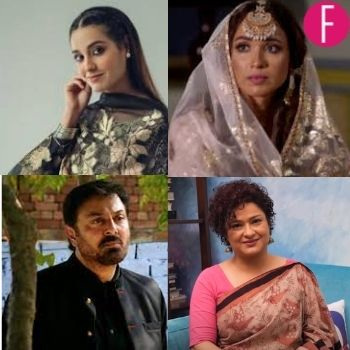
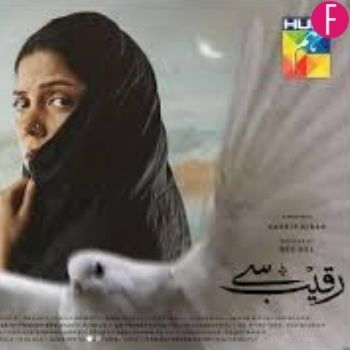
Raqeeb Se. What does the title imply? A little enemy-like OR from my enemy? After watching the grand total of 23 episodes – which I must say is quite enemy-like for the production house – I’d like to believe it’s the former.
We, the humans, are a little enemy-like towards ourselves. Maqsood saab, Sakina, Hajra, Rafiq Ali and even Ameera (to some extent) are their own biggest enemies.
Mr. M is so high on himself that like a spoiled Pakistani man he waits TWENTY YEARS for his wife, Hajra, to come fall at his feet.
She does fall. But only to pick up his shoes.
“Jootay bohat melay hogaye aaj aap ke jee.”
Yes, because your husband took Ameera for a rendezvous at Ravi. A Ravi you’ve never seen despite
living a few minutes away from it for the past 20 years.
“Naraaz matt hojayega jee, bechari pareshaan hai.” Everyone and their grandmother is pareshan and needs “special care” except Hajra. Because “Mera kya hai jee!”
“Doosri aurat tou mein hoon jee, pehli tou woh hai.” This last statement, or belief on Hajra’s part, is what ruined Maqsood and Hajra’s relationship. Or should I say ‘contract’, because relationship is not what these two share.
At first glance, Hajra comes off as your regular wife-next-door. She wears choorian, paranda, and a slight smile. She definitely looks the part. But her eyes tell you she’s never felt the part. She slaves away to maintain her husband’s sanity. Little does she know, she’s only eating away at it with her selflessness.
Because selflessness means you care more about others than yourself. Hajra only cares about Maqsood saab’s feelings. Those 20-year old feelings that he himself wishes to get rid of. In fact, those feelings died with Mansoor Ahmed on that ill-fated night at the train station. But we don’t discover that until the 21st episode. And neither does Hajra.
By this time, if you’re a sane woman, you must be seething at Hajra and planning a crusade against Maqsood sahab on her behalf. Sit down, she has Insha by her side. Insha, her daughter, is the audience’s voice in Raqeeb Se.
Sakina prances in one fine night to her ex-mehboob, Maqsood saab’s place and Hajra is like: “That’s what I’ve been waiting for all my life. Bas, Sakina aur Maqsood saab ka nikkah hojaye tou mein hajj karke chain ki neend so jaon.”
Woman, you’re not Maqsood’s mother
And that is exactly what Insha says to her, time and again. But Hajra’s steadfastness makes us believe, begrudgingly, that some people are actually THAT nice to their own gender.
We’d slot Hajra into the bechari bahu category but we can’t. She isn’t forgiving at all for Rafiq Ali – Sakina’s husband who beats her to pulp whenever his insecurities run high. She believes women have the right to divorce if they’re unhappy. She believes she’s the queen of the house.
You see that when she declares, “Mera ghar hai. Jis ko jaana hai yahan se chala jaaye.”
It’s only Maqsood saab who makes her weak at the knees…and brain.
That’s what love does to you.
Love for others makes you weak. Love for yourself makes you strong.
This does not give you a license to turn into Aatiqa bhaabhi. This woman is the antithesis of Sakina and Hajra. She’s the log in log kya kahengay.
If you ever wonder, “Log kya kahengay?” Just give a call to Aatiqa bhaabhi on her new iPhone. But first turn on the air conditioner because she can feel the heat of poverty even on the other side of the line.
This, again, doesn’t mean Aatiqa bhabhi is a complete goner.
No, she’s human. She wipes Insha’s tears when she’s signing those nikkah papers. We can see the little wobble in her throat when Sakina breaks down.
“Mein Mansoor Ahmed ko tou nahi bacha saki lekin meri jhooti gawahi ne Maqsood saab ko bacha liya,” Sakina cries.
And she’s been crying for the past 20 years.
Her husband beats her. She cries. Then stands up and takes care of Bhoori.
Bhoori dies. She cries. Then stands up to help Hajra clean the house for Insha’s rishta-meeting.
Sakina has pronounced herself guilty of Mansoor Ahmed’s physical and Maqsood saab’s emotional death.
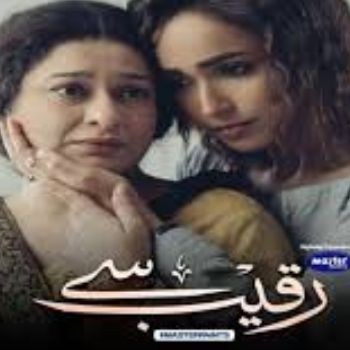
And when your own verdict comes against you, you stop loving yourself. Sakina, also, has stopped loving herself. So here she is, being beaten black and blue and she endures it, until it’s Ameera at the receiving end of Rafiq Ali’s sotti.
That she cannot bear. Because she loves Ameera.
Now, this motherly love gives her the strength to grab Ameera and take her to the reassuring presence of Maqsood saab. Or so she thinks.
That’s where Raqeeb Se’s story begins.
Raqeeb Se begins from where most stories end
A toofani mohabbat is cut short by bhai ki gherat, giving way to a loveless marriage which results in the grand escape 20 years later. Our Sakina has escaped. Now, she’ll live happily ever after with her Maqsood saab. That’s all folks!
It isn’t.
In reality, Maqsood was over his Sakina and her Anjuman-esque adayen in sarson ke khet.
He wanted to become rich and successful. Quite a sane decision I must admit. But he’s burdened by the love he’s kept going from his side. So he decides, “Chalo let’s elope with Sakina and be done with it.”
Since them eloping together would be too obvious. He, being the selfish man that he is, asks his little brother Mansoor Ahmed to do the Dew.
Mansoor, being a brown munda, goes all, “I’m going to sacrifice my life for bhai and honey waali bhaabi.”
And he does.

Now, he’s lying peacefully in his grave for the past twenty years while all the other participants don’t know what to do with themselves.
Sakina, Maqsood saab, and Hajra – they’re all guilty. Hajra because she thinks she’s forced herself and her daughter on Sakina’s Maqsood saab.
The guilt doesn’t let them put themselves and their happiness first
When I began watching Raqeeb Se, I tagged my sister along, and after one episode she said, “Iss mein naya kya hai?” and left me. Since then, Raqeeb Se and I have given each other company many a nights.
After first few episodes, I said to myself, “OMG! Hajra is going to make nihaari out of Maqsood saab. She said she’s like her father and her father murdered her mother. So, Maqsood nihari is definitely on the cards. Aha!”
After a few more episodes, the Star Plus ki naagin in me was disappointed. “Nah, we ain’t seeing any murders. Hajra is what Pakistani Twitter wishes every mother should be – nurturing, selfless, and supportive. But man, Sakina doesn’t have that spark. Maqsood saab what did you see in her? Aap ne bari ghalti kardi (in Sakina style).”
After almost half the show, “Oh wow, you can’t take any character of this show on their face value. Except maybe Aatiqa bhabhi. Even Rafiq Ali has a reason to beat Sakina. The man’s wife is still cleaning her ex-mehboob’s place! But nah, he’s still evil.”
Toward the end of the show I concluded, “Humans are complicated. Love is even more complicated. But one thing is for sure: Respect and love yourself! That will empower you.”
That sounds right out of thousands of “Be your own Boss” feminist pages popping up on Instagram, right?
It is.
But, unfortunately this “radical” idea of putting yourself first has never been made palatable for our “masses” – the people who apparently own peoples meter and decide the fate of all Pakistani shows. Let me tell you, ratings are a farce. One of our Media Planning instructors back in the day candidly told us, “Oh these channels bribe households [which fall under peoples meter’s tiny universe] with television sets where they’re supposed to run a certain channel only.”
So when a producer says, “Audience humesha Marium ko martay dekhna chahti hai”, ask them to go look in the mirror and repeat it.
Like a smart drug dealer, these businessmen, who call themselves content creators, have drugged the audience into believing they can’t breathe without the bholi larki-ameer/saviour larka tropes.
For the longest time (even now) I believed I don’t like Chinese, Thai, and any other Pan-Asian cuisine. The truth is, I’m afraid to experiment. I’m comfortable in my desi and continental food. My parents are happy too. Why burst the bubble?
You burst the bubble to develop your palate. Pakistani television has stopped helping the audience to develop their palate.
Nothing against the daal-chawal shows. They’re your comfort food. Okay cool. But why not introduce a new dish once in a while?
Intelligent television not only entertains, but also educates the audience.
And please don’t go all Vidya Balan from Dirty Picture here and say, “I watch TV for entertainment, entertainment, anddd entertainment!”
We all do.
You do realise that all that messaging isn’t bouncing off your brain?
It’s affecting and shaping your sub-conscious mind. Maybe Raqeeb Se will help a Sakina from Sindh to stop dwelling on the past and live in the moment. Maybe it will give a Hajra in Hunza the strength to take what’s rightfully hers. It will teach an Ameera that being like her father is nothing to be proud of. Maybe, she should try being more like her mother.
Bee Gul plays smart. She gives them – the alleged audience that loves women hating on women – the roti hui Sakina. But she also gives them an Insha to balance things off.
She gives them the ever-giving Hajra. But she also gives them a selfish Ameera. Hajra didn’t try to fight for her OWN husband’s attention. Ameera made sure she had everyone and their husband’s attention.
And in the end, she shows us how all our female characters learn to respect themselves and lead their lives without any sahara. Boo ya misogynist content leads and producers!
Anyway, coming to our characters, the question is: Is Ameera evil?
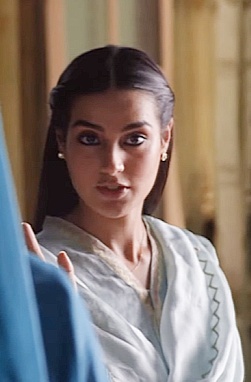
No. She’s a product of her experiences.
Insha, on the other hand, is the product of Maqsood saab’s experiences. He wants to make Insha everything he and Hajra are not.
She won’t dwell on a rotten marriage and an opportunist man like Abdul. She’ll take khula.
So, everyone who thinks feminism means women brandishing bras on the street, think again. Well, to each their own (bra). Feminism, at the core, is Insha walking on the street with her head held high because she knows she’s enough for herself…and the women around her.
Going back to my sister’s observation: Raqeeb Se is not different!
Agreed, the story of Raqeeb Se is not different. The storytelling is different.
Our writers don’t pay attention to the screenplay and it shows. If they want to show a character is angry, they’ll make another character randomly observe, “Yaar tum ghusse mein lag rahe ho”. Just make the damn dude frown. We’ll understand. We aren’t THAT dumb you know.
In Raqeeb Se they paid attention to the screenplay and that too showed.
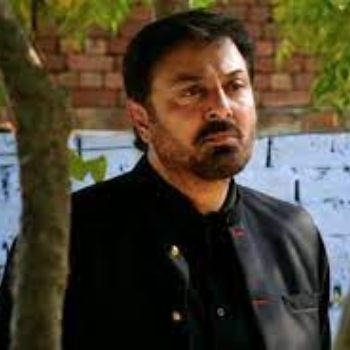
We knew Abdul is an opportunistic ass when he hugs Masood (the minister and Insha’s taaya) instead of Maqsood (his father in law) after his nikkah with Insha. The slight shadow of understanding that passes on Nauman Ejaz’s face gives it all away.
In episode nine when we heard the OST for the first time, every verse washed us over with a wave of understanding.
“Talaash karne chalay hum
Kabhi jo khud ko kahin
Siyaah raat ke taaray
Fareb detay rahe…”
Iss shair mein shaer is blatantly pointing out that all these characters are on a journey of self-discovery and empowerment, but they’re being misguided by bright stars. And we all know, stars only look nice from afar. You get closer to them, you die.
“…Humein tou jhootay saharay
Fareb detay rahe…”
The jhoota sahara over here is probably Maqsood saab. Everyone thinks of him as this pillar of strength. “Woh sab sambhaal lengay,” says Hajra.
But we saw how he couldn’t save himself from Rafiq’s attack on the first visit to pind. Ameera lied through her teeth to save his male pride.
“Woh pyaar jo humara haath thaam chalte thay
Fareb detay rahe woh
Hum fareb khaatay rahe..”
When this verse plays in episode nine, we witness THE moment. Maqsood saab holds Hajra’s hand and leads her to her rightful place as Sakina looks on. The meaningful poetry continues,
“Woh apne jinki mohabbat pe naaz tha humko
Muhabatton ke woh maaray
Fareb detay rahe..”
Everyone talks about “Maqsood aur Sakina ki kahani” with reverence. There is a certain naaz in the way people narrate it. Remember Insha communicating it to Abdul and leaving us all in a trance in the first episode? The mohabbat everyone boasts about is nothing but fareb. All these eternal loves stories – Romeo-Juliet, Laila-Majnu, Sassi-Punno, and so on – are inconclusive. That’s why they’re eternal.
Sakina and Maqsood’s love story would’ve become a folktale, had they not gotten the chance to meet again and realise people and emotions change over the course of time.
Change is the only thing that’s constant. And when you defy it, your life becomes a mess.
Raqeeb Se won’t give you cliff hangers or answer your questions in a straightforward way.
For some of us, Ameera’s infatuation with Maqsood saab may be a bit too disconcerting. I remember pausing the show when a young girl, visiting from our village, came and sat with me while I was watching Raqeeb Se. I didn’t want an impressionable mind to think of this whole Ameera-Maqsood equation in an aspirational way.
And that’s probably where we make a mistake as an audience. We underestimate ourselves.
Then the whole suicide angle of Ameera, again, irked me. At first, I thought she regrets it, hence, the change in behavior with Sakina. But then when she says to Kashif, “Mujhse hamdardi karein. Poochein meine aisa kyun kiya. Meray kya maslay hain”, I realised she’s still standing where she was. Her attention deficit is as never ending as Pakistan’s debt.
Yes, minds like Ameera’s are prone to getting suicidal thoughts. I remember watching a play on PTV where Resham’s character falls in love with Abid Ali’s character. He is her father’s friend and when he doesn’t reciprocate, she commits suicide. The play didn’t have any conclusion or maybe I didn’t “get” it. It didn’t tell me if suicide was the only way out for her or she could’ve gotten over it. I was a kid back then and that play still nags me every now and then.
Similarly, in Raqeeb Se we see Ameera surviving and leading life on her own terms. But throwing in a suicide, just like that, isn’t responsible. Especially, when you follow it up with how everyone gets a weird clarity after Ameera’s reckless step.
Another reckless plot point was Kashif’s death. One second he’s sipping juice, the next one he’s gone. Poof, just like that.
Bee Gul wanted to draw parallels between Sakina and Ameera’s life. I understand. Sakina had to get over Mansoor Ahmed’s khoon ke cheentay and now Ameera has to put Kashif’s blood behind.
How did she survive the shooting? Well, professional assassins don’t really believe in collateral damage. They don’t wish to get their higher-ups in any extra trouble. That’s what Indian don movies have taught me.
Another reason to kill Kashif off can also be to prove to women that they can survive without a man.
Also, Kashif was too good to be true. If you’ve ever done a science experiment, you’d know how the instructor first creates a control – the experiment where every factor is perfect. Kashif was the control every man in Raqeeb Se can be gauged against.
Add a lot of insecurity into the mix and you’ll get Rafiq Ali. Turn the feelings down and pride up, and you’ll get Maqsood saab. Take opportunism to full throttle and you have our Abdul.
But the most plausible reason is the Dhuaan-syndrome. Yep. Ever since Dhuaan killed Nabeel to “Kisse da yaar na vichray” playing in the background, every other character wishes to die like him and every writer wishes to write an iconic death like his. Ashir Azeem – the director and writer of Dhuaan – admitted in one of his interviews that rest of the friends weren’t supposed to die in the end, but looking at Nabeel’s popularity after death, they couldn’t resist.
Should we believe that Kashif Nisar and Bee Gul also couldn’t resist to add some theatrics at the end?

We can’t deny that last night’s gham hour on Pakistani TV side of Twitter was sponsored by Kashif’s tragic death.
Wrapping this lengthy reflection up, let’s admit Bee Gul and Kashif Nisar’s Raqeeb Se could’ve faltered had it not been supported by Sania Saeed, Nauman Ejaz, Faryal Mehmood, Hadiqa Kiani, Iqra Aziz, Saqib Sameer, Hassan Mir, Hamza Sohail, Salman Shahid and Saba Faisal.
The calmness Saeed brought to Hajra, the rawness Kiani lend to Sakina, the charm Ejaz added to not-so-lovable Maqsood saab, and the feistiness Aziz sparked in Ameera is what made the audience sing along with these humans of Raqeeb Se. I won’t say characters, because they felt a bit too real.
It made me realise my Naani was a Hajra. She was divorced with two children when my Nana decided to marry her. He, being the most eligible bachelor with a bachpan ki mangetar in tow, and she, being not a Bhutto and divorcee, had to elope (against her will, she told us, which shouldn’t have been the case). There were repercussions. She was always the outsider and that guilt translated into her children and lifestyle. My mother still thinks we’re ‘outsiders’ and well, let’s just say I’m proud to be one.
So when Hajra confessed it was her ex-marriage and father’s phaansi that had left her emotionally crippled. I believed her. For us, it might not be a huge deal. It was eons ago. But for any Hajra, who has lived through it, it shapes her reality and how she behaves.
Speaking of actors and their excellence, I earlier left Faryal Mehmood and Saqib Sameer out on purpose, because all of us talk about the greatness of Sania and Nomi bhai and Iqra’s Noori. Actors who don’t get their due appreciation are the likes of Mehmood and Sameer. They prove that casting should be done on the basis of performance and not followers or star value.
The strength that reverberated in every syllable uttered by Insha was all Faryal Mehmood’s doing. There was a scene in the second last episode which transitioned from Insha to Sakina. While Sakina’s emotions were raw, Insha’s voice touched the heart. If I closed my eyes, I could still feel all the emotions. That’s the mark of a good actor like Faryal Mehmood.
Saqib Sameer, trained from NAPA, played a man twice his age and there isn’t a single moment you doubt him. He had to be crass. He was. He had to make us hate Rafiq. He did. He even had to make us understand Rafiq. He did that too.
The man who made sure the ship sailed is Kashif Nisar. The only complaint I have of him is that he needs to explore other cultures except for Punjab. Explore more actors. And maybe more sets? Raqeeb Se, O Rungreza, and Ranjha Ranjha Kardi had pretty similar set design, which is rich and pleasing, but one should always try to break free from their shackles – even if they’re gorgeous.
You ask why Raqeeb Se deserves the praise. It proves you can base your story on human beings who’re way past their puberty. It proves women do not hate women. It shows, if women stand together they can fight patriarchy and misogyny, and finally be able to breathe. They can take their own life decisions and ride the wave they wish to ride.
Maybe this is exactly what scares the men (and women) who sit high above us in glass boxes. They’ll give us 20 Nands and even Chupke Chupke but one Raqeeb Se will need to fight through.

Well analyzed